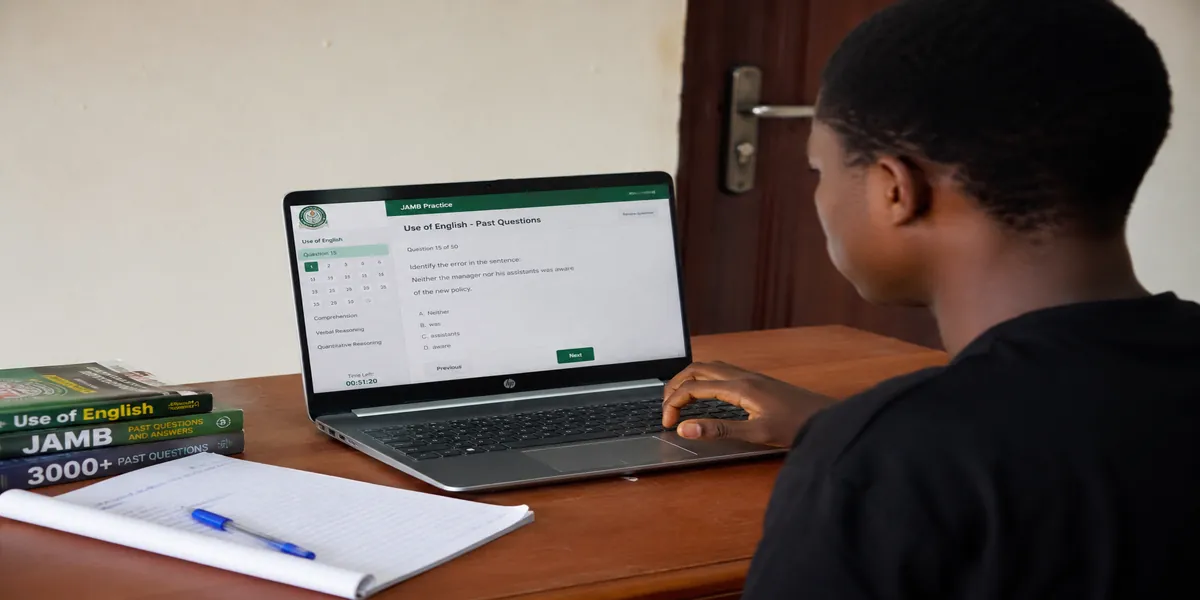
If you have ever run out of time halfway through JAMB Use of English, you already know its biggest secret: this exam is not just about knowing English, it’s about knowing English fast. Unlike WAEC or NECO, JAMB gives you no essay to slowly plan and no room to think for too long on any single question. This guide shows you exactly how to prepare for that speed, so you walk in ready instead of rushing.
In my experience teaching students preparing for JAMB, I have noticed that many candidates already have decent grammar knowledge from WAEC preparation, but still underperform in JAMB because of poor time management and unfamiliarity with JAMB’s specific question style. Once you understand exactly how JAMB is structured and timed, your score improves significantly often without learning any new grammar at all. Let’s break it down.
Why JAMB Use of English Feels Different From WAEC and NECO
Many people believe JAMB Use of English is “easier” because there is no essay to write, but that is not correct. JAMB replaces essay writing with speed and volume you must answer many objective questions across comprehension, cloze passages, and grammar in a limited time, all within the wider UTME English section alongside other subjects.
If you have already prepared using our WAEC English Language Study Guide or NECO English Language Study Guide, most of your grammar and vocabulary preparation transfers directly here what changes is your approach to time and question style.
Understanding the JAMB Use of English Structure
Most students were taught this incorrectly, or never taught it clearly: JAMB Use of English usually contains around 60 objective questions, and this is the section every JAMB candidate must answer, regardless of their chosen course of study. It typically covers:
| Question Type | What It Tests |
|---|---|
| Comprehension passages | Understanding and interpreting a written passage quickly |
| Cloze passages | Filling gaps in a passage with the correct word based on context |
| Lexis and structure | Grammar rules, sentence correction, and word usage |
| Oral forms | Vowel sounds, consonant sounds, stress, and rhymes, tested in written form |
Here’s an easy way to remember it: JAMB tests the same core skills as WAEC and NECO reading, grammar, vocabulary, and sound recognition just compressed into a faster, fully objective format.
Part 1: Mastering Comprehension Under Time Pressure
I have explained this to hundreds of students: in JAMB, you don’t have the luxury of reading a passage three times. One simple trick I recommend is reading the questions first, then reading the passage with those questions in mind this saves valuable time.
- Skim the passage quickly to understand the general topic (30 seconds).
- Read the questions before a detailed second read.
- Scan for answers rather than rereading the whole passage line by line.
Memory trick: If two options seem correct, choose the one that is most directly supported by the passage’s exact wording, not the one that simply “sounds” more intelligent.
Part 2: Cloze Passages: JAMB’s Signature Question Type
This is one of the most common English mistakes Nigerians make in JAMB: guessing cloze answers based on grammar alone, without considering the meaning of the whole passage. Cloze questions test both grammar and context together.
Example: “The manager was very ______ about the new proposal, so he approved it immediately.”
- ❌ “reluctant” — contradicts “approved it immediately”
- ✅ “enthusiastic” — fits both grammar and meaning
Part 3: Lexis and Structure: Grammar at Speed
From classroom experience, these are the grammar areas JAMB tests most consistently, and where quick, confident recognition saves the most time:
Common JAMB Grammar Traps
- “Each of the students have submitted their form” → ✅ “Each of the students has submitted his or her form”
- “The news are good” → ✅ “The news is good” (“news” is treated as singular)
- “He is taller than me” (informally acceptable, but formally) → ✅ “He is taller than I (am)”
One simple trick I recommend: For “than I/me” style questions, mentally complete the missing verb “taller than I am” sounds complete and correct, while “taller than me am” immediately sounds wrong.
Strengthen your grammar foundation further with our Ultimate English Skills Guide.
Part 4: Oral Forms: Sounds Tested on Paper
This mistake is extremely common in Nigeria: candidates skip oral form revision because “JAMB is objective, not spoken,” forgetting that oral forms are tested through written multiple-choice questions about sound.
Vowel Sound Groups
Practise identifying which word has a different vowel sound from the rest for example, in the group “cup, cut, put, but,” the word “put” has a different vowel sound from the other three.
Silent Letters
Words like “honest,” “hour,” “know,” and “wrist” contain silent letters that JAMB frequently tests. A short daily list of these words builds fast recognition.
Stress Patterns
JAMB sometimes tests which syllable carries the stress in words like “PHOtograph,” “phoTOgrapher,” and “photoGRAPHic” notice how the stress shifts as the word changes form.
Part 5: Time Management: The Real JAMB Skill
My advice is simple: practising grammar alone is not enough for JAMB. You must also practise answering under strict time limits, because the exam rewards speed as much as accuracy.
| Strategy | Why It Works |
|---|---|
| Answer easy questions first | Secures quick marks and builds confidence early |
| Don’t dwell on one hard question | Protects time for questions you can answer confidently |
| Practise with a timer at home | Trains your brain to work faster under real exam pressure |
| Review flagged questions last | Ensures uncertain answers don’t consume time meant for easier ones |
Part 6: A Realistic JAMB Study Plan
Don’t try to memorise everything at once. Spread your preparation sensibly across the weeks before your exam.
- Weeks 1–2: Revise core grammar rules and vocabulary using past mistakes as your guide.
- Weeks 3–4: Practise comprehension and cloze passages under timed conditions.
- Final 2 weeks: Do full timed past-question practice sessions, reviewing every wrong answer carefully.
Affordable resources: JAMB past questions (widely available in bookshops, apps, and online), a simple English dictionary, and consistent reading are enough for solid preparation you don’t need expensive materials to succeed.
Part 7: Overcoming Exam-Day Pressure
You are not alone if the pressure of a computer-based, timed exam feels different from writing WAEC or NECO by hand. A few practical habits help:
- Practise with computer-based mock tests beforehand, not just printed past questions
- Manage your overall UTME time wisely, since English is just one section among several
- Trust your first instinct on grammar questions rather than second-guessing repeatedly
- Remember that consistent practice, not last-minute cramming, builds real speed and accuracy
Even advanced English speakers occasionally hesitate under exam pressure. With regular, timed practice, you will improve steadily and walk into JAMB feeling in control rather than rushed.
Frequently Asked Questions
How many questions does JAMB Use of English usually have?
JAMB Use of English typically contains around 60 objective questions, covering comprehension, cloze passages, lexis and structure, and oral forms.
Is JAMB Use of English harder than WAEC English?
Not necessarily harder, it tests the same core skills but under much stricter time pressure and without any essay component, which changes the preparation approach significantly.
What is the biggest mistake candidates make in JAMB cloze passages?
Choosing a grammatically correct word that does not fit the passage’s actual meaning. Always read the full passage before answering cloze questions.
How can I improve my JAMB English speed before the exam?
Practise full past-question sets under strict timing regularly, and review every mistake to understand why the correct answer was right.
Conclusion: You Are Ready to Tackle JAMB Use of English
You now understand exactly how JAMB Use of English is structured, what each question type demands, and how to manage your time to maximise your score. This is not information to read once practise this every day, even in small timed sessions, and real improvement will follow.
This mistake is easier to fix than you think, and with consistent, timed practice, you will improve steadily and confidently. Bookmark this page, share it with a friend also preparing for JAMB, and continue learning with our WAEC English Language Study Guide, our NECO English Language Study Guide, our Ultimate English Exam Preparation Guide, or explore more lessons on our homepage.
Reference: British Council- LeranEnglish
Written by Tr. Edidiong Sunday
About Author
Edidiong Sunday is an English educator, communication specialist, and the founder of ExamGuideNG. She holds a Diploma in Mass Communication and a B.Ed. in English Education from the University of Uyo, and is currently pursuing a Master’s degree in English Education. With years of experience teaching English Language, Diction, and Public Speaking in reputable schools in Uyo, she creates practical, accurate, and learner-focused content to help students, job seekers, and professionals improve their English skills. Edidiong also runs a JAMB English tutorial centre in Uyo and has professional experience in journalism, broadcasting, and public speaking. Every article she publishes is guided by a commitment to clarity, accuracy, and helping learners achieve lasting success in academics, examinations, and everyday communication.
Related Articles
- The Complete English for Jobs and Career Guide: Professional Communication, Interviews and Workplace Success
- The Complete English for Jobs and Career Guide: Professional Communication, Interviews and Workplace Success
- The Ultimate English Skills Guide: Grammar, Vocabulary, Pronunciation and Fluent Communication
