The Fear of Speaking English Ends Today
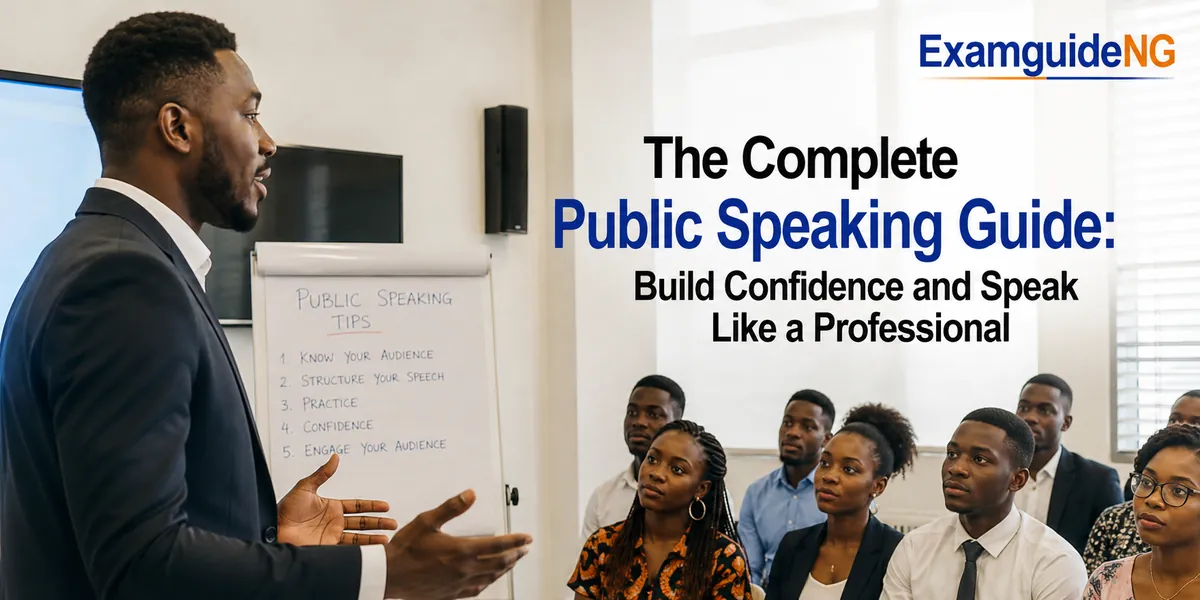
If your hands shake and your mind goes blank the moment you stand up to speak, you are not alone. Many Nigerian students freeze during class presentations. Many graduates fumble their words in job interviews. Many young professionals sit quietly in meetings, afraid to contribute, even when they have good ideas. This is not because you lack intelligence. It is because nobody taught you how to speak in public. That is exactly what this guide will do. By the end of this lesson, you will understand why the fear happens, and you will have simple, practical steps to speak with confidence, whether you are answering a WAEC oral exam question, defending a project at university, greeting customers at your NYSC place of primary assignment, or presenting to your boss.
Quick Promise: In my experience teaching students, the ones who struggle most with public speaking are not the weakest in English. They are the ones who were never given a simple structure to follow. This guide gives you that structure.
Why Nigerian Students and Job Seekers Fear Public Speaking
Before we fix the problem, let us understand it. One mistake I see almost every day is students confusing “fear of speaking” with “poor English.” These are two different problems.
1. Mother Tongue Interference
Many Nigerians grow up speaking their native language at home and English mainly in school. This is called mother tongue interference. It affects pronunciation, sentence construction, and confidence. For example, a Yoruba, Igbo, or Efik speaker may pause mid-sentence, worried about pronouncing a word “the English way.” This hesitation is often mistaken for lack of intelligence, but it is simply a language transition issue that can be corrected with practice.
2. Pidgin Influence
Nigerian Pidgin is a beautiful and useful language, but it can create habits that clash with formal English. For example, someone used to saying “I dey come” may translate this directly and say “I am coming” when they mean “I will be there shortly.” In formal settings like interviews or presentations, this direct translation can confuse the listener.
3. Fear of Making Mistakes in Public
This is the biggest barrier. Most students were taught that making a grammar mistake in public is embarrassing. So instead of speaking and correcting themselves, they choose silence. Over the years, I have noticed that silence is often mistaken for humility, but it usually costs people marks in oral exams, opportunities in interviews, and respect in the workplace.
4. Poor English Teaching in Some Schools
Many students were taught English as a subject to memorise for WAEC or JAMB, not as a tool for real communication. This is why someone can pass WAEC English with a good grade, yet still freeze during a real conversation or interview. Grammar rules were memorised, but speaking confidence was never built.
Remember: You are not alone if you struggle with this. Even advanced English speakers get nervous before public speaking. The goal is communication, not perfection.
The 4 Pillars of Confident Public Speaking
From classroom experience, I always tell my students that public speaking stands on four pillars. If any one is missing, confidence collapses. Let us go through them one by one.
Pillar 1: Preparation
Confidence does not come from talent. It comes from preparation. Before any presentation, interview, or oral exam, do the following:
- Write out your main points on paper, not word for word, just the key ideas.
- Practise saying them out loud, alone in your room, at least three times.
- Time yourself so you know if you are too fast, too slow, or just right.
- Identify difficult words in your speech and practise pronouncing them before the day.
Pillar 2: Breathing and Body Language
One simple trick I recommend is the “three breath rule.” Before you speak, take three slow breaths. This calms your heartbeat and clears your mind. Combine this with good posture: stand or sit up straight, keep your shoulders relaxed, and make eye contact with your listener or audience. Avoid crossing your arms or looking down at the floor, as this signals nervousness even before you say a word.
Pillar 3: Sentence Structure
You do not need long, complicated sentences to sound intelligent. Short, clear sentences are more powerful in public speaking. Compare these two examples:
Weak (Too Complicated) Strong (Clear and Confident)
“Due to the fact that I have been undergoing preparation for a considerable period of time, I believe that I am sufficiently equipped to undertake this task.” “I have prepared for this for a while, and I am ready.”
“It is my humble opinion that the aforementioned strategy may potentially yield favourable results.” “I believe this strategy will work well.”
Here’s an easy way to remember it: if you cannot say your sentence in one breath, it is probably too long for public speaking.
Pillar 4: Practice Under Pressure
The final pillar is practising in conditions similar to the real event. If you have a job interview, practise answering questions with a friend acting as the interviewer. If you have a class presentation, practise in front of your siblings or roommates first. This mistake is easier to fix than you think: most people only practise alone, quietly, and then panic when a real audience is watching.
Public Speaking in Nigerian Real-Life Situations
Let us now apply these pillars to situations you will actually face.
WAEC and NECO Oral English
Many students lose marks in oral English not because they do not know the sounds, but because they rush and mumble out of nervousness. Slow down. Pronounce each word clearly. If you are unsure of a sound, it is better to say it slowly and correctly than quickly and incorrectly.
Pronunciation Tip: Many Nigerian students struggle with the “th” sound, saying “dis” instead of “this” or “tink” instead of “think.” Practise by placing your tongue lightly between your teeth and pushing air out gently. Practise in front of a mirror for five minutes daily.
University Presentations and Project Defence
When defending your project, examiners are not just testing your knowledge; they are testing whether you understand your own work. If you cannot explain it simply, it suggests you have memorised rather than understood it. My advice is simple: explain your project to someone outside your course of study, perhaps a family member. If they understand you, your lecturers will too.
NYSC Camp and CDS Presentations
During NYSC, you will often be asked to introduce yourself or present ideas during Community Development Service meetings. Prepare a short, confident self-introduction: your name, your course of study, your skills, and one thing you hope to contribute. Practise this until it feels natural, not memorised word for word.
Job Interviews
Interview panels are not looking for perfect grammar. They are looking for clarity and confidence. If you are asked, “Tell us about yourself,” avoid reciting your CV word for word. Instead, speak naturally: your background, your strengths, and why you want the role. Pause, breathe, and speak at a steady pace.
Workplace Meetings and Presentations
In the workplace, confidence in speaking often determines who gets noticed for promotion. Focus on understanding before memorising. If your manager asks for your opinion in a meeting, do not say “I don’t know” out of fear. Instead, say “From what I have observed…” or “One idea I would suggest is…” These phrases show engagement, even if your idea is still developing.
Common Public Speaking Mistakes and How to Fix Them
Mistake Why It Happens How to Fix It
Speaking too fast: Nervousness and wanting to “get it over with”. Practise pausing after every two sentences.
Avoiding eye contact: Shyness or fear of judgment. Look at foreheads if direct eye contact feels difficult
Using filler words (“umm,” “like,” “you know”): Thinking while speaking. Pause silently instead of filling gaps with sound.
Memorising word for word: Fear of forgetting. Learn key points, not exact sentences.
Apologising before speaking (“Sorry, my English is not correct”): Low confidence. Simply begin speaking; let your content speak for itself.
Vocabulary for Confident Public Speaking
Here are useful words and phrases to sound more professional when speaking, along with their meaning and pronunciation guidance.
Articulate: (ar-TIC-yoo-late) to express ideas clearly. Example: “She articulated her point well during the meeting.”
Concise: (kun-SICE) short and clear, without unnecessary words. Example: “Keep your answers concise during the interview.”
Composure: (kum-POE-zher) calmness under pressure. Example: “He maintained his composure despite the difficult question.”
Rapport: (ra-POR) – a friendly connection with your audience. Example: “Building rapport with the interviewer helped her relax.”
Elaborate: (ee-LAB-or-ate) – to explain something in more detail. Example: “Could you elaborate on that point?”
Common Confusion: Many students confuse “articulate” with “elaborate.” To articulate means to say something clearly. To elaborate means to add more detail. You can articulate a short point without elaborating on it further.
Daily Practice Exercises
Practise this every day. Small daily practice brings big improvement.
The Mirror Exercise: Speak in front of a mirror for two minutes daily on any topic. Focus on posture and eye contact.
The Recording Exercise: Record yourself speaking on your phone, then listen back. Note where you spoke too fast or used too many filler words.
The One-Minute Topic: Pick a random topic (your best friend, your favourite food, your course of study) and speak about it for one minute without stopping.
The Read-Aloud Habit: Read a newspaper article or a page from a textbook aloud daily. This builds pronunciation and fluency at the same time.
Quick Revision Summary
Fear of public speaking comes from mother tongue interference, Pidgin influence, and fear of mistakes, not lack of intelligence.
The four pillars of confident speaking are preparation, breathing and body language, simple sentence structure, and practice under pressure.
Speak in short, clear sentences rather than complicated ones.
Apply these skills specifically to WAEC oral exams, university presentations, NYSC activities, job interviews, and workplace meetings.
Practise daily using the mirror exercise, recording exercise, and read-aloud habit.
Frequently Asked Questions
How can I stop being nervous when speaking English in public?
Start with preparation and breathing. Prepare your key points in advance, take three slow breaths before you begin, and remember that the goal is communication, not perfection. Nervousness reduces naturally with regular practice.
Why do I understand English but struggle to speak it fluently?
This is extremely common in Nigeria. Understanding and speaking are two different skills. You may understand English well from reading and listening, but speaking requires active practice. Daily speaking exercises, even alone in your room, build this skill over time.
How can I improve my English for job interviews?
Practise answering common interview questions out loud, not just in your head. Focus on clarity and confidence rather than perfect grammar. Employers value clear communication more than flawless sentences.
Does Pidgin English affect my spoken English negatively?
Pidgin itself is not the problem. The challenge arises when Pidgin sentence patterns are directly translated into formal English situations, such as interviews or presentations. Being aware of this helps you switch appropriately between the two.
How long does it take to become confident at public speaking?
With consistent daily practice, most students notice real improvement within four to six weeks. Confidence builds gradually with repeated exposure and practice, not overnight.
Conclusion: Your Voice Deserves to Be Heard
If you want to improve your English faster, start today, not tomorrow. Practise the mirror exercise for two minutes right now. Read one paragraph aloud before you close this page. This mistake is easier to fix than you think, and with regular practice, you will improve. Whether you are preparing for a WAEC oral exam, a university presentation, an NYSC assignment, or your dream job interview, your ideas deserve to be heard clearly and confidently.
For more practical English lessons, explore our full library of resources at ExamGuideNG. If you are preparing for an exam, visit our English for Exams section. If you are preparing for interviews or career growth, check out English for Jobs and Career. For general communication skills, visit English Skills and Communication
Reference: The British Council emphasises that confidence and clarity, built through consistent practice, matter more in effective communication than perfect grammar alone.
Related Articles to complete this lesson
- The Ultimate Presentation Skills Guide: Plan, Deliver and Impress Every Audience
- The Complete Business English Vocabulary Guide: Essential Words and Expressions for Professionals
- The Ultimate Customer Service English Guide: Speak Professionally and Handle Customers with Confidence
- The Complete Office Communication Guide: Professional English for the Workplace
- The Ultimate Lexis and Structure Guide: Grammar, Vocabulary and Practice Questions
Written by Tr. Edidiong Sunday
About Author
Edidiong Sunday is an English educator, communication specialist, and the founder of ExamGuideNG. She holds a Diploma in Mass Communication and a B.Ed. in English Education from the University of Uyo, and is currently pursuing a Master’s degree in English Education. With years of experience teaching English Language, Diction, and Public Speaking in reputable schools in Uyo, she creates practical, accurate, and learner-focused content to help students, job seekers, and professionals improve their English skills. Edidiong also runs a JAMB English tutorial centre in Uyo and has professional experience in journalism, broadcasting, and public speaking. Every article she publishes is guided by a commitment to clarity, accuracy, and helping learners achieve lasting success in academics, examinations, and everyday communication.
